Reviewing Another Day Completely Ruined SVG for Embroidery
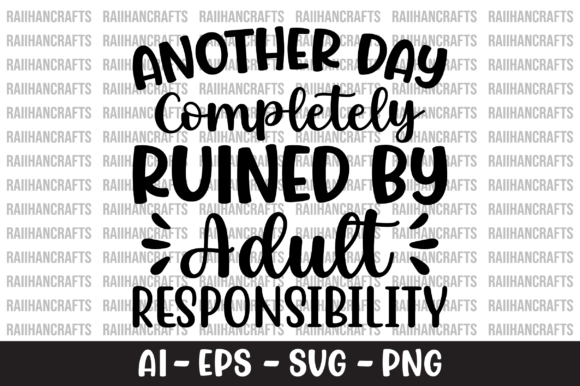
As a designer who has spent countless hours digitizing and stitching out files for clients, I have learned that the visual appeal of a graphic on a screen rarely translates perfectly to thread without careful consideration. When I first pulled up Another Day Completely Ruined SVG, my initial reaction was one of amused recognition. The phrase captures a specific, relatable mood—those moments when adulting feels less like a responsibility and more like a series of hilarious disasters. For embroidery professionals and craft business owners, this kind of humor is gold. It sells because it connects.
However, moving from a digital asset in the Crafts and Graphics category to a tangible finished product requires a critical eye. I evaluated this design not just as a picture, but as a potential machine embroidery design ready for the hoop. Here is my practical assessment of how this file performs in real-world scenarios, from boutique apparel to personalized gifts.
First Impressions and Visual Personality
The layout of Another Day Completely Ruined SVG leans into a casual, slightly chaotic aesthetic that matches its message. The typography likely features uneven baselines or playful distortions, which is excellent for conveying personality but can be tricky for stitching. In my experience, designs with this level of character work best when they are not over-digitized. If every little jagged edge of the font is converted into a dense satin stitch, you risk creating a stiff, cardboard-like patch that ruins the drape of the fabric.
The mood is sarcastic yet warm. It is the kind of design a friend would appreciate on a rough Monday morning. This emotional resonance makes it a strong candidate for personalized gift markets. When I imagine this stitched out, I see it working particularly well on items meant for comfort and relief, such as cozy home goods or relaxed wear. It does not scream "formal occasion"; instead, it whispers "I need coffee and silence," which is a powerful niche in the current craft business landscape.
Real-World Application: The Sweatshirt Test
To truly test the viability of this embroidery file, I mentally placed it on a classic crewneck sweatshirt. This is perhaps the most natural home for such a statement piece. The thick cotton blend of a sweatshirt provides the necessary stability for larger text designs without requiring excessive backing. Imagine a customer browsing an Etsy seller’s shop, looking for a humorous gift for a stressed-out colleague. This design, stitched in a contrasting thread color like white or cream on a heather grey hoodie, offers immediate visual impact.
Beyond apparel, consider a tote bag design. Canvas totes are sturdy and popular among makers. Stitching this phrase onto a heavy-duty canvas bag creates a functional accessory that doubles as a mood indicator. The durability of the stitch work here is crucial. Since tote bags carry weight, the fabric stretches. If the stitch density is too high, the design might pucker or distort under load. A balanced approach using a mix of fill stitch for larger letters and running stitch for finer details would ensure longevity.
Navigating Fabric and Hoop Constraints
One must be cautious where this design is applied. While it looks great on flat, stable surfaces, curved or stretchy fabrics present challenges. For instance, applying this to a baby embroidery project like a onesie requires extreme care. Babies move, and their skin is sensitive. A dense block of text can feel scratchy and restrictive. If you choose to use this on infant wear, I recommend scaling it down significantly and ensuring the back of the stitching is covered with a soft, cut-away stabilizer.
Similarly, caps and hats are tricky. The curved surface of a cap distorts wide designs. If Another Day Completely Ruined SVG has a wide aspect ratio, it may wrap awkwardly around the front panel of a hat. In such cases, I advise breaking the design into two lines or stacking the text vertically to fit within a standard 4x4 or 5x7 hoop size. Always check the dimensions of your specific machine’s hoop before committing to a project. What fits on a 6x10 hoop might not fit on a smaller domestic machine, leading to frustrating re-digitizing or resizing efforts.
Thread Choices and Contrast
The success of any text-based embroidery relies heavily on thread colors and contrast. Since the message is the hero, legibility is paramount. On dark fabrics, a bright, high-contrast thread is essential. However, avoid neon shades unless the brand identity calls for it; they can look cheap if not paired with high-quality thread. On light fabrics, consider using a deep navy, charcoal, or forest green to maintain readability without the harshness of pure black.
I also recommend testing the design in a black-and-white mockup before stitching. This strips away the distraction of color and reveals whether the spacing between letters is sufficient. Tight kerning can lead to thread buildup, where stitches from adjacent letters merge into an unreadable blob. If the SVG file allows for easy separation of elements, take advantage of it to adjust spacing in your embroidery software.
Commercial Viability and Brand Consistency
For small shop product creators, consistency is key. Does this design fit your brand? If your shop specializes in elegant, minimalist wedding decor, this sarcastic phrase might clash. However, if your brand voice is witty, modern, and relatable, it is a perfect fit. It appeals to a demographic that values authenticity over perfection. This makes it ideal for holiday embroidery gifts, particularly for occasions like Secret Santa or Galentine’s Day, where humor is often preferred over sentimentality.
When selling custom apparel or embroidered patch items featuring this design, transparency about care instructions is vital. Inform customers that embroidered items should be washed inside out in cold water to preserve the integrity of the stitches. This small step builds trust and reduces return rates, enhancing your reputation as a professional commercial embroidery provider.
Practical Designer Notes
Before you list this as a digital embroidery file or stitch it for a client, keep these technical checks in mind:
- Test on Scrap Fabric: Never stitch a new design directly on the final garment. Use a similar fabric scrap to check for puckering or thread breaks.
- Check Stitch Density: Ensure the design is not too dense for lightweight fabrics. If it is, consider using a lighter weight thread or reducing the density in your software.
- Verify Licensing: The product description mentions the files are compressed, but always confirm the license terms. Can you sell finished physical items? Can you resell the digital file? Clarify this to protect your craft business.
- Inspect Small Details: Zoom in on the curves of the letters. Are there enough stitches to create a smooth arc, or will it look jagged? Minor adjustments in digitizing can make a huge difference.
- Stabilizer Selection: Match your stabilizer to your fabric. Cut-away for knits and stretchy materials, tear-away for woven cottons. This prevents distortion and ensures the design lays flat.
In conclusion, Another Day Completely Ruined SVG is a versatile and engaging asset for the right project. It thrives in casual, humorous contexts and performs well on stable, medium-to-heavy weight fabrics. By paying attention to stitch density, hoop constraints, and thread contrast, you can transform this digital graphic into a high-value handmade product that resonates with customers. Whether for a printable mockup in your online store or a physical tote bag design at a craft fair, this design offers a blend of relatability and style that, when executed with precision, can significantly boost buyer engagement.