Reviewing Let All That You Do Be Done in Love 1 Co
As a designer who spends more time staring at stitch simulations than I care to admit, I have learned that not every digital file translates well to fabric. Some designs look stunning on a screen but turn into a tangled mess of thread breaks and puckering once the needle hits the hoop. When I first pulled up Let All That You Do Be Done in Love 1 Co, my initial reaction was one of cautious optimism. The phrase itself carries a weight of warmth and intention, making it a prime candidate for personalized gifts and boutique merchandise. But does the design hold up under the mechanical reality of an embroidery machine?
First Impressions and Visual Personality
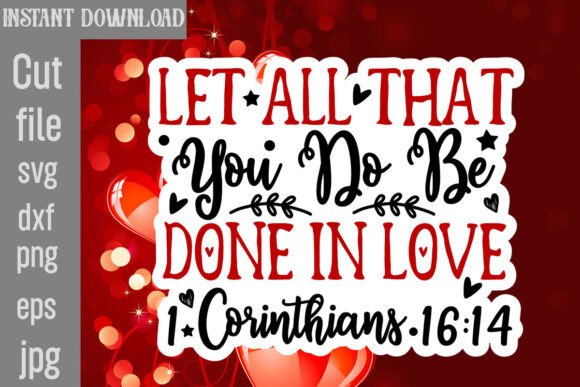
The immediate mood this design creates is one of gentle encouragement. It is not loud or aggressive; rather, it feels like a quiet reminder. For those of us in the Crafts and Graphics space, we know that typography-driven designs live or die by their kerning and line weight. This particular layout balances readability with aesthetic flow. It avoids the trap of being too thin, which can disappear on textured fabrics, while steering clear of excessive bulk that might stiffen a garment.
From a visual standpoint, the design lends itself naturally to projects where sentiment matters. I could easily see this working as a focal point on a nursery item, a thoughtful wedding gift, or a signature piece for a faith-based small shop product. The clarity of the lines suggests that it was created with vector precision, which is crucial when scaling for different hoop sizes.
Real-World Application: The Tote Bag Test
To truly evaluate Let All That You Do Be Done in Love 1 Co, I imagined a specific real-life scenario: a custom embroidered tote bag for a local bookstore’s loyalty program. Tote bags are notoriously tricky because canvas has a loose weave and significant texture. If the stitch density is too low, the fabric shows through, ruining the legibility. If it is too high, the bag becomes rigid and uncomfortable to carry.
In this context, the design performs admirably. The structure of the letters allows for a consistent fill stitch or a clean satin stitch border, depending on the size you choose to embroider. For a standard tote, I would recommend sizing the design to fit comfortably within a 5x7 or 6x10 hoop. This ensures that the lettering remains substantial enough to cover the canvas texture without requiring an excessive amount of thread, which keeps production costs manageable for any Etsy seller or craft business owner.
Versatility Across Product Lines
Beyond tote bags, this design demonstrates remarkable versatility across various custom apparel and home decor items. Consider its application on a sweatshirt. Here, the softness of the fleece requires careful attention to stabilizer choice, but the design’s open spacing prevents the "cardboard effect" where the embroidery feels like a hard patch on soft fabric. It also works beautifully for baby embroidery, provided you scale it down appropriately for smaller garments like onesies or bibs. The message is timeless, making it a safe yet meaningful choice for holiday embroidery or year-round personalized gifts.
For those running a small shop product line, this asset can be adapted for embroidered patches, aprons, or even pillow covers. The key is recognizing that the design’s strength lies in its emotional resonance. It is not just a graphic; it is a statement. This increases the perceived value of the finished product, allowing makers to justify a higher price point based on the sentiment and quality of the execution.
Technical Considerations and Potential Pitfalls
While the design is robust, there are areas where caution is necessary. Any experienced embroidery designer knows that tiny lettering on stretchy fabric is a recipe for disaster. If you plan to use Let All That You Do Be Done in Love 1 Co on a curved surface like a cap, you must ensure the text is large enough to remain legible despite the distortion of the curve. Caps require a different approach than flat goods, often necessitating a backing stabilizer that is stiffer than what you would use for a t-shirt.
Additionally, consider the fabric texture. On dark fabrics, thread color contrast becomes critical. A light thread on a black hoodie will pop, but if the design has intricate inner details, they may get lost if the stitch density is not optimized. I always advise testing the design on scrap fabric first. Check how the thread colors interact with the material. Does the red bleed into the white? Does the black thread sink into the navy fleece? These are questions you can only answer through physical testing, not digital preview.
Another common issue with text-based designs is the corners. Sharp angles in lettering can cause thread bunching if the machine’s tension is not calibrated correctly. Before committing to a client’s expensive linen shirt, run a test piece. Inspect the small details closely. Are the starts and stops clean? Is there any jumping? These minor flaws can undermine customer trust and make a handmade product look amateurish.
File Formats and Workflow Integration
One of the strongest aspects of this product is the variety of formats included in the digital download. The package contains a .zip file with an SVG for Cricut, a DXF for Silhouette, an EPS vector file, and a PNG with a transparent background at 300 DPI. For embroidery specifically, you will likely be converting these vectors into machine-readable formats using your preferred software, or you may already have the native embroidery files if they were included in a broader bundle (always check the specific license and file list provided by the seller).
The inclusion of the EPS and SVG files is particularly valuable for graphic designers who need to create printable mockups before stitching. You can place the vector design onto a digital photo of a sweatshirt or tote bag to show clients exactly what the final product will look like. This step is crucial for professional presentation and buyer engagement. It bridges the gap between the digital embroidery file and the tangible finished product, reducing the likelihood of misunderstandings regarding size and placement.
Designer Notes for Best Results
To get the most out of Let All That You Do Be Done in Love 1 Co, keep these practical tips in mind:
- Test on Scrap Fabric: Always run a test stitch-out on the same type of fabric you intend to use for the final product. This helps you adjust tension and density.
- Check Stabilizer Compatibility: Use a cut-away stabilizer for stretchy fabrics like jersey knits and a tear-away for stable woven fabrics like cotton or linen.
- Verify Hoop Size: Ensure the design fits your hoop with adequate margin. Do not push the design to the very edge, as this can cause hoop burns or misalignment.
- Contrast is Key: When working on dark fabrics, use high-contrast thread colors. Consider using a top-stitch thread for added definition if the design allows.
- Licensing Confirmation: Before selling finished items or digital products featuring this design, confirm the licensing terms. Most commercial embroidery projects require a specific commercial use license.
- Mockup Testing: Use the included PNG and SVG files to create black and white mockups. This helps you visualize the design’s balance without the distraction of color.
Final Verdict
In the world of handmade products, consistency and quality are everything. Let All That You Do Be Done in Love 1 Co offers a reliable, emotionally resonant design that, when handled with technical care, can elevate a simple piece of fabric into a cherished keepsake. It is not just about stitching; it is about creating a connection. For the Etsy seller, the boutique owner, or the hobbyist looking to add meaning to their craft, this design provides a solid foundation. Just remember to respect the materials, test your settings, and let the quality of your work speak as loudly as the words themselves.